
7 Best Audio Interfaces for the Home Studio in 2026
Whether you’re recording vocals in a spare bedroom, producing tracks in a home studio, or building a more professional hybrid setup, your audio interface is one of the most important pieces of gear you’ll buy.
A great audio interface doesn’t just improve sound quality, it affects your workflow, latency, monitoring, recording experience, and overall creativity. And in 2026, there are more excellent options available than ever before.
The good news is that you no longer need to spend thousands of dollars to get professional-quality recordings at home.
What to Look for in an Audio Interface
Before diving into specific models, it’s worth thinking about what actually matters when choosing an interface. One of the biggest mistakes musicians make is buying based purely on specs. In reality, reliability, workflow, and ease of use often matter more than tiny differences in technical performance.
Driver Stability & Latency
A technically impressive interface means very little if the drivers are unstable. Pops, clicks, crashes, and latency issues can completely kill a creative session. Low latency becomes especially important when recording vocals, guitars, or MIDI instruments in real time. A smooth monitoring experience helps musicians perform naturally without feeling disconnected from what they’re hearing. In many cases, reliability matters more than ultra-high-end specs.
Inputs & Outputs
Think carefully about both your current needs and future growth. A singer-songwriter recording vocals and acoustic guitar may only need two inputs, while producers recording drums, bands, synths, or external hardware may quickly outgrow smaller interfaces. It’s often worth thinking slightly ahead rather than buying only for today’s setup.
Preamps & Sound Character
Some interfaces aim for ultra-clean transparency, while others add subtle analog-style coloration and character. Neither approach is necessarily better, it simply depends on your workflow and personal taste.
If you mainly record podcasts or voiceovers, clean transparency may be ideal. But for vocals, guitars, or more musical productions, some users prefer interfaces that add a little warmth or personality while tracking.
Connectivity
USB-C has become the standard for most home studios in 2026 thanks to its speed and compatibility. Thunderbolt interfaces remain popular in larger professional setups due to extremely low latency and high bandwidth, especially for sessions with large track counts and demanding plugin chains. Fortunately, modern USB-C interfaces are now more than capable for most musicians and producers.
Expansion & Future-Proofing
Features like ADAT expansion can become incredibly valuable later on, allowing you to add additional preamps and inputs without replacing your entire interface. Even if you only need two inputs today, having room to grow can save money and headaches down the line.
Workflow Matters More Than Specs
At the end of the day, the “best” interface is the one that fits naturally into your workflow and helps you stay creative. An interface that works quickly, reliably, and intuitively will almost always inspire better sessions than one packed with features you never actually use.
Now that we have covered some of the things to look for in an audio interface, here are some of the best units for home studios in 2026, whether you’re just starting out or looking to upgrade your setup.
Focusrite Scarlett 2i2 (4th Gen)
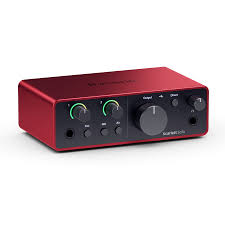
If you’re looking for one of the best beginner-friendly audio interfaces in 2026, the Focusrite Scarlett 2i2 continues to be incredibly hard to beat.
Focusrite interfaces have become studio workhorses for a reason. They’re reliable, affordable, easy to use, and sound genuinely great for the price. The latest 4th Gen Scarlett series includes improved preamps, better converters, auto gain features, and impressive dynamic range.
I’ve personally used both the Scarlett 2i2 and the larger 18i20 extensively, and they’ve been absolutely fantastic. The 18i20 in particular is one of those interfaces that quietly earns its reputation by simply working day after day without drama.
For singer-songwriters, podcasters, content creators, and smaller home studios, the Scarlett 2i2 is still one of the best value interfaces available today.
Best for:
- Beginners
- Singer-songwriters
- Home studios on a budget
- Mobile recording setups
Solid State Logic SSL 2+ MKII
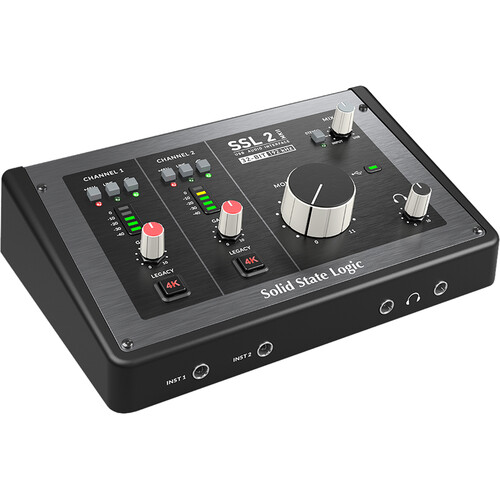
Solid State Logic is a legendary name in professional studio gear, and the SSL 2+ MKII brings some of that studio heritage into the home recording world.
What makes the SSL interfaces particularly interesting is their focus on musicality and analog-inspired character rather than purely clinical sound. The “Legacy 4K” mode adds a subtle harmonic enhancement inspired by classic SSL consoles, which can help vocals and instruments feel a little more polished right from the recording stage.
The SSL 2+ MKII also offers a sleek desktop workflow, quality monitoring controls, and solid build quality that feels more premium than many interfaces in its price range.
For musicians who want a slightly more “record-like” sound while tracking, this is a very appealing option.
Best for:
- Producers
- Vocalists
- Guitarists
- Creators wanting analog-inspired character
Universal Audio Volt 276
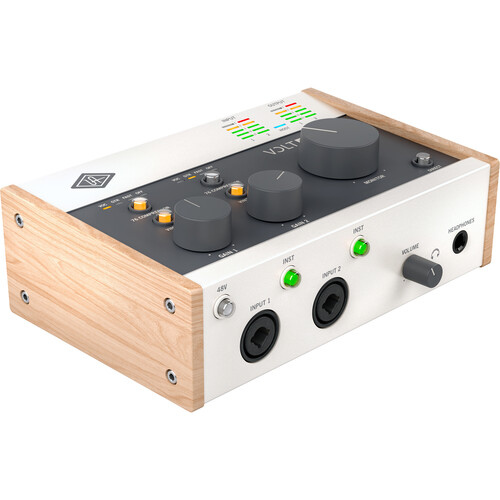
Universal Audio has long been associated with high-end professional recording systems, and the Volt series brings some of that experience into a much more affordable package.
The Volt 276 stands out thanks to its built-in analog-style compressor, inspired by the classic 1176 compressor that helped define countless hit records. That onboard compression can be especially useful for recording vocals, bass, and acoustic instruments without needing additional hardware or plugins.
The interface is also stylish, portable, and beginner-friendly while still delivering excellent sound quality.
For creators who want a slightly more polished, “produced” sound during recording, the Volt 276 is a really compelling option.
Best for:
- Vocal recording
- Content creators
- Mobile producers
- Artists wanting simple onboard processing
MOTU M4
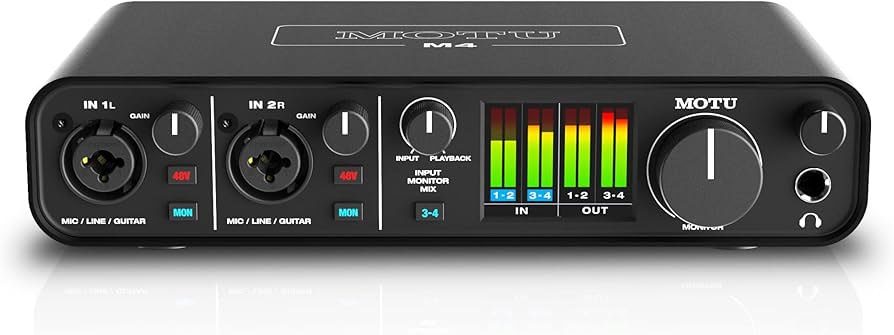
The MOTU M4 has quietly become one of the most respected budget-to-midrange interfaces on the market, particularly among producers and engineers who prioritize performance and reliability.
One of the biggest strengths of the M4 is its excellent driver stability and impressively low latency performance. It also features clear front-panel metering that’s genuinely useful during recording sessions – something many interfaces in this price range overlook.
The sound is clean, detailed, and professional, making it an excellent option for musicians who want strong technical performance without overspending.
For many home studio users, the MOTU M4 hits a sweet spot between affordability and pro-level usability.
Best for:
- Producers
- Musicians wanting ultra-low latency
- Budget-conscious studios
- Everyday home recording
Audient iD24
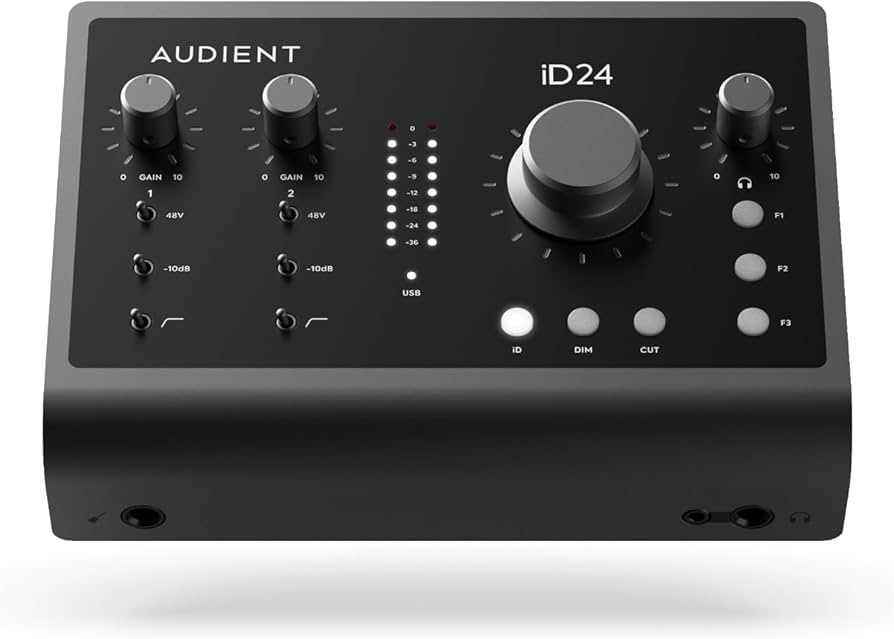
Audient has built a strong reputation for creating interfaces that bridge the gap between affordable home studio gear and more professional recording equipment.
The iD24 offers excellent sounding preamps, solid build quality, expandable I/O via ADAT, and a clean, professional workflow that feels more high-end than its price tag suggests.
It’s a particularly good choice for musicians who may eventually want to grow their setup without immediately jumping into a large rack-mounted system.
The iD24 strikes a really nice balance between simplicity, sound quality, and future expandability.
Best for:
- Growing home studios
- Producers needing expansion options
- Musicians upgrading from entry-level gear
- Hybrid recording setups
Heritage Audio i73 Pro 2
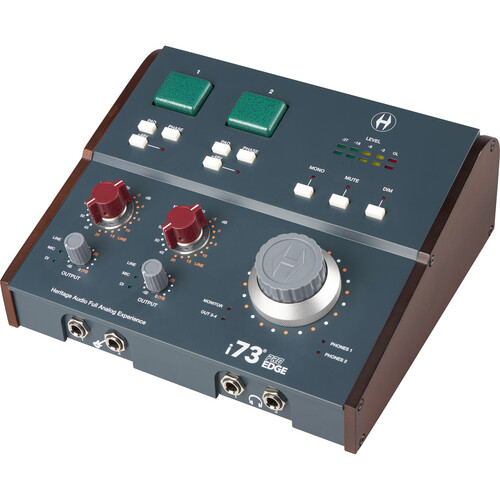
If you’re chasing a more premium, vintage-inspired recording experience, the Heritage Audio i73 Pro 2 is one of the most interesting interfaces currently available.
Heritage Audio has built a strong reputation for recreating classic analog gear, and the i73 Pro 2 leans heavily into that philosophy. Its preamps are inspired by vintage British console designs and are aimed at musicians who want warmth, depth, and character during the recording process.
This interface is definitely more of an investment than some of the others on this list, but for serious home studio users, producers, and engineers, it offers a very different flavor compared to cleaner, more transparent interfaces.
It’s particularly appealing for vocals, guitars, acoustic instruments, and projects where vibe and tone are a big part of the recording process.
Best for:
- Serious home studios
- Producers and engineers
- Hybrid analog workflows
- Musicians chasing vintage-inspired tone
RME Babyface Pro FS
If reliability is your absolute top priority, the RME Babyface Pro FS deserves serious attention.
RME interfaces are legendary for their driver stability and long-term dependability. Many engineers continue using RME hardware for years across multiple operating systems and studio upgrades without issues.
The Babyface Pro FS combines excellent audio quality, rock-solid performance, advanced routing capabilities, and portability in a compact format that works equally well in professional studios and mobile setups.
It’s more expensive than many home studio interfaces, but for users who value stability and longevity above all else, it’s one of the best investments available.
Best for:
- Professional users
- Engineers needing maximum reliability
- Mobile recording rigs
- Long-term studio investment
Final Thoughts
The best audio interface for your home studio ultimately depends on your workflow, goals, and budget.
For some musicians, a simple two-channel interface is more than enough to make incredible records. Others may need expandability, onboard DSP, analog-style coloration, or more advanced routing options.
The good news is that in 2026, even relatively affordable interfaces are capable of delivering professional-level results.
The most important thing is finding an interface that inspires you to create, works reliably, and fits naturally into your recording process.
Because at the end of the day, great music has always mattered more than gear specs.
Would you like to share your thoughts?
Your email address will not be published. Required fields are marked *